
By Natasha Bourlin
14 January, 2026
Big Island
Big Island Beaches
Maui
Maui Beaches
Things to Do on Maui
Things to Do on the Big Island
Visiting Hawaii
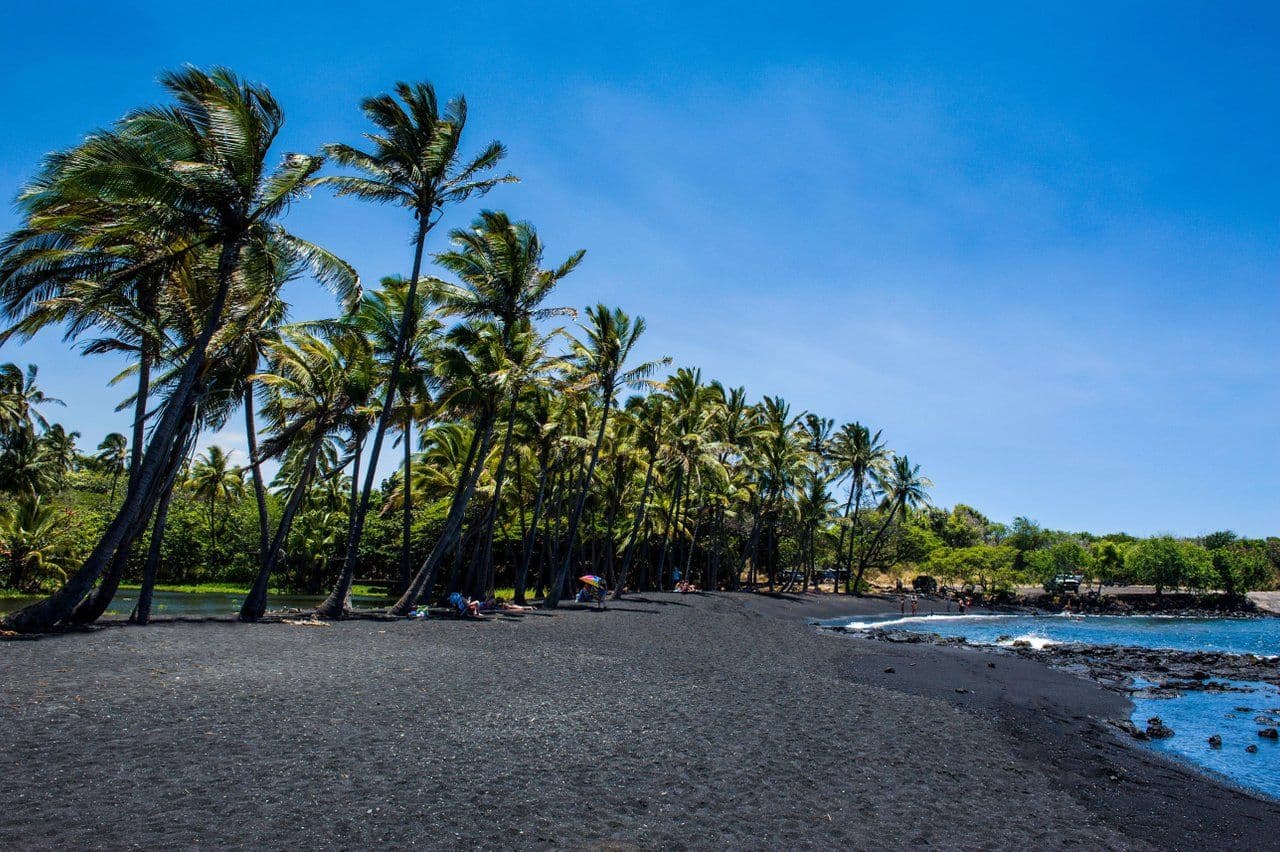
Punaluʻu Black Sand Beach. Photo by Robert Harding Video (Shutterstock).
This article was originally published on January 14, 2026, and was updated March 28, 2026.
If you only have time to visit one black sand beach in Hawaiʻi, you should visit Punalu'u Black Sand Beach — a jet-black. sea turtle-friendly beach on Hawaiʻi Island covered in tiny specks of basalt lava.
Hawaiʻi’s beaches are kaleidoscopic in color, with green, gray, golden and red sands found across the islands, contrasting with crystalline waters. As the youngest islands in the Hawaiian archipelago, Hawaiʻi Island and Maui boast striking black sand beaches formed from eroded volcanic lava and basalt rock. When molten lava flows into the cooler ocean, it crystallizes, shatters, erodes and forms black sand that is eventually deposited back onto land by the sea.
These unusually colored beaches are numerous and diverse on Hawaiʻi Island, the youngest in the island chain, while Maui, the second youngest Hawaiian island, has just two. Black sand beaches are not always swimmable, however, as many are located in areas with strong ocean currents and powerful surf. Some are difficult to access, while others offer the convenience of parking lots and facilities.
Here is a guide to help you choose the right black sand beach based on safety, accessibility and what you want to experience.
See all
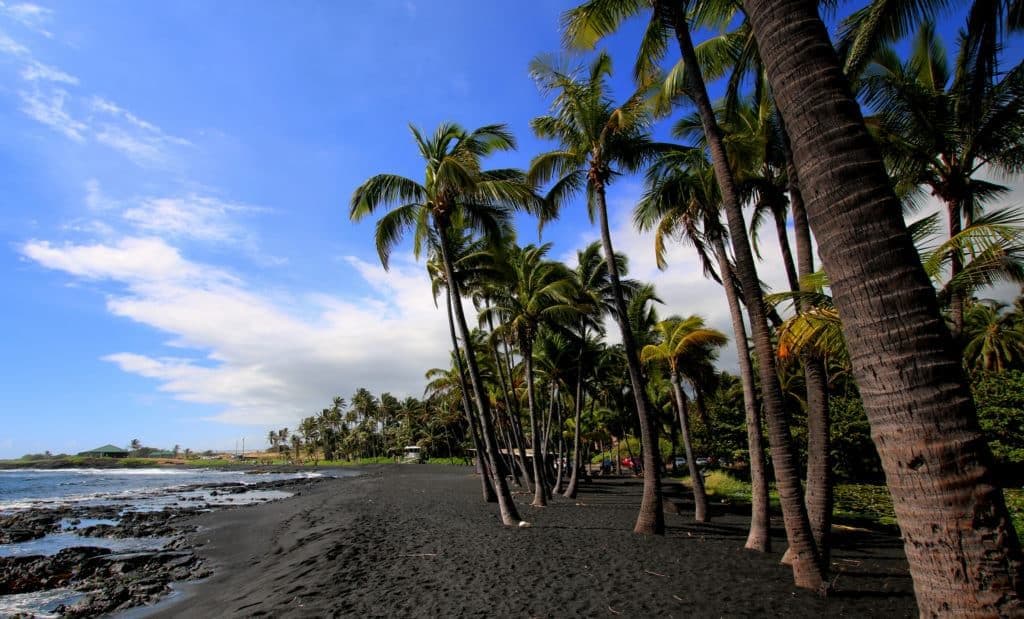
Punaluʻu Black Sand Beach, Hawaiʻi Island.
Editor's Pick: Punaluʻu is the best black sand beach for first-timers looking for something easily accessible.
The parking lot is large, facilities are clean and honu, or Hawaiian green sea turtles, are regularly on the beach sunning themselves on the sand — remember not to get too close. The black sand here is fine-grained rather than rocky, making it more comfortable to walk on than some of the island's other volcanic beaches.
Island: Hawaiʻi Island
Best For: Swimming, sunbathing, boogie boarding
Swimming: Yes, but check conditions first (can be hazardous)
Turtles/Seals: Both
Facilities: Yes
Parking: Yes
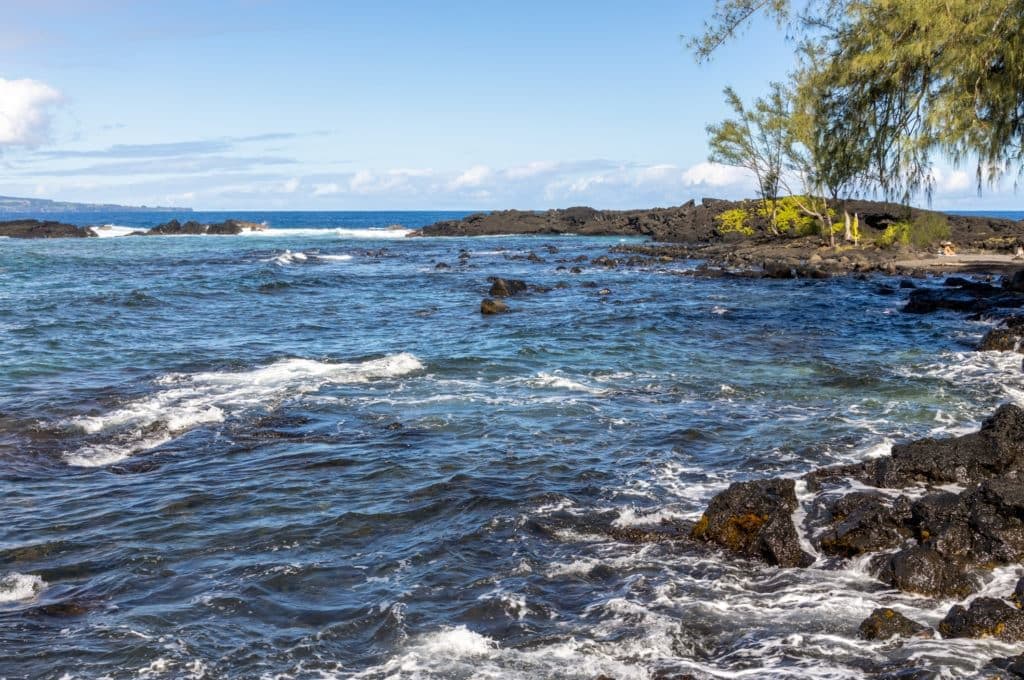
Richardson Ocean Park, Hawaiʻi Island.
Richardson Ocean Park in Hilo is less a beach and more of a snorkeling spot. The water here is calm and clear, great for spotting tropical fish and resident sea turtles. The beach itself is small and rocky rather than sandy, but the snorkeling is some of the best and most accessible on the island — you'll need to bring your own gear. It has a relaxed, neighborhood feel compared to some of the beaches that attract more visitors on the Kohala Coast.
Island: Hawaiʻi Island
Best For: Snorkeling and fishing
Swimming: Yes
Turtles/Seals: Both
Facilities: Yes
Parking: Yes

Kehena Beach, Hawaiʻi Island.
Kehena is the kind of beach you have to want to find, since to access it you have to hike down a steep lava cliff trail. There is no signage and no facilities, but it does have a gorgeous crescent-shaped black sand beach. A resident pod of spinner dolphins frequently visits the bay, which alone makes the scramble worthwhile. It has a free-spirited, anything-goes reputation, so come with an open mind and a sense of adventure.
Island: Hawaiʻi Island
Best For: Clothing optional
Swimming: No
Turtles/Seals: Turtles and dolphins
Facilities: No
Parking: No
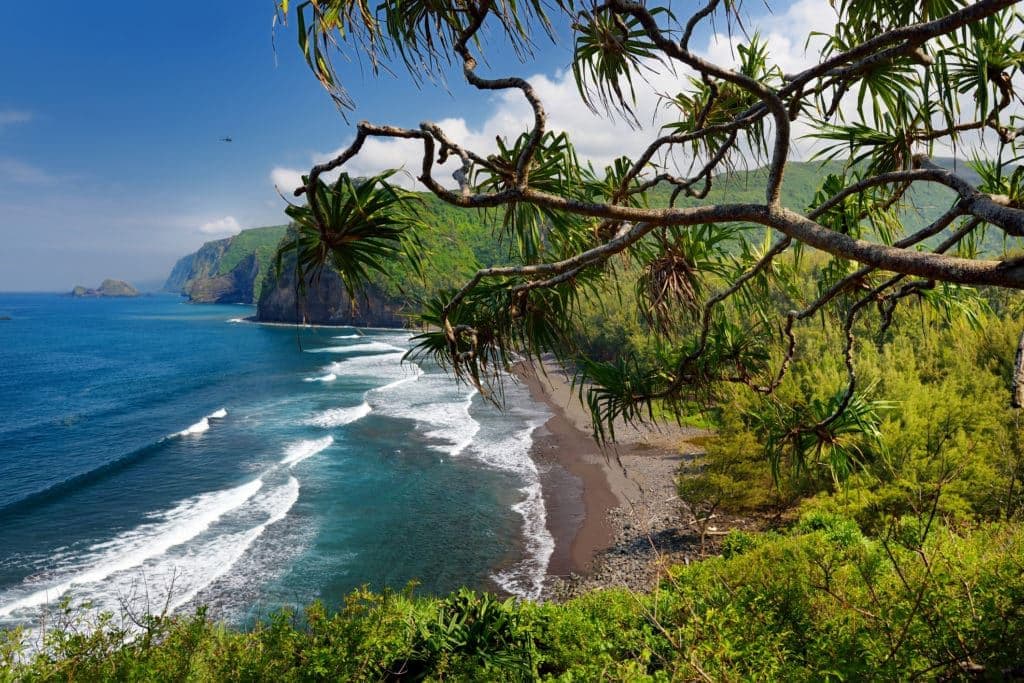
Pololū Black Sand Beach, Hawaiʻi Island.
Pololū requires hiking a short but steep trail down into the valley. Don't forget, you'll have to hike back up afterward. The payoff is worth it. At the end of the trail is a remote black sand beach backed by towering sea cliffs and lush valley. The water here is too rough for swimming, so its more about taking in the landscape. The overlook at the trailhead alone is one of the best views on the island.
Island: Hawaiʻi Island
Best For: Sunbathing and walking
Swimming: No
Turtles/Seals: Turtles
Facilities: No
Parking: Yes

Pohoiki Beach (Isaac Hale Beach Park), Hawaiʻi Island.
Pohoiki has a remarkable origin story. This black sand beach was created almost entirely by the 2018 Kīlauea eruption, which sent lava pouring into the ocean and reshaped the coastline almost overnight. It's now a popular spot for surfing and bodyboarding, with a boat ramp and facilities making it one of the more accessible beaches. The sand is coarse and the shore break can be powerful, so its not ideal for swimming. Instead, watch the surfers and enjoy the view around you.
Island: Hawaiʻi Island
Best For: Fishing and surfing
Swimming: Yes, for experienced swimmers only
Turtles/Seals: Both
Facilities: Yes
Parking: Yes
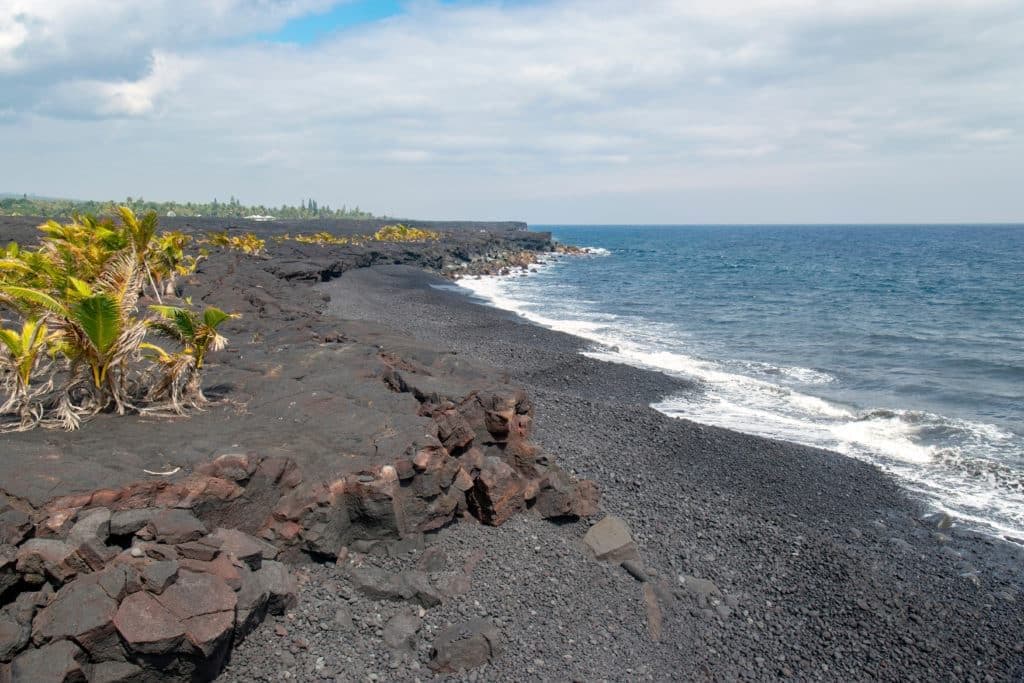
Kaimū Beach, Hawaiʻi Island.
Kaimū is another beach born from the 2018 eruption, sitting within the Kalapana lava fields where entire neighborhoods were buried under lava in the late 1980s and again more recently. The landscape is stark and lunar, with hardened lava stretching in every direction. The beach is beautiful but the setting is the real draw, a reminder that this island is still actively building itself.
Island: Hawaiʻi Island
Best For: Sunbathing
Swimming: No
Turtles/Seals: Both
Facilities: No
Parking: Yes
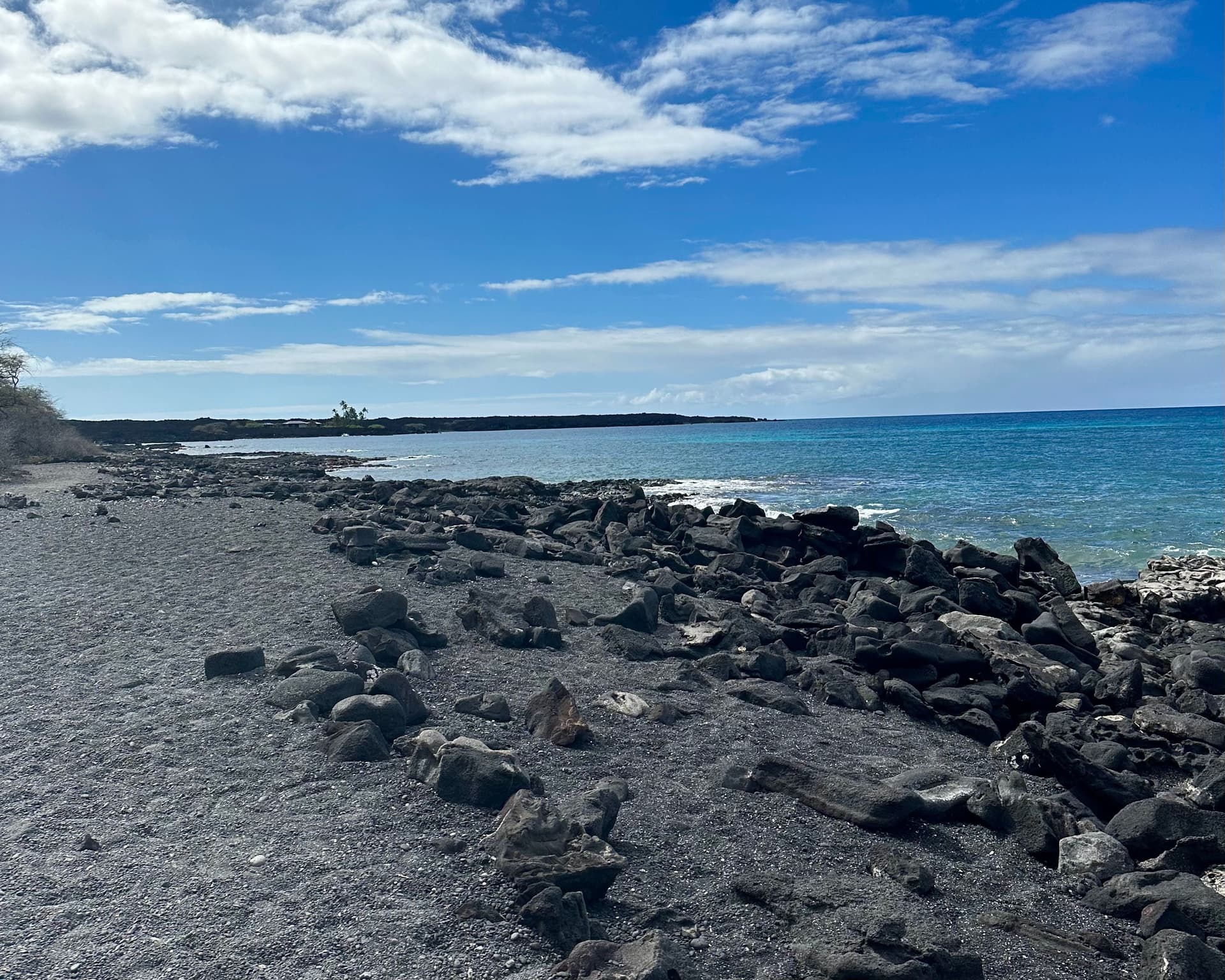
Kīholo Bay, Hawaiʻi Island. Photo by Natasha Bourlin.
Kiholo Bay is one of the Big Island's best-kept secrets, a stunning stretch of coastline accessible by a rough dirt road or a 30-minute coastal walk from the highway pull-off. The bay is a mix of black lava, white sand and brackish freshwater fed by underground springs. The snorkeling here is exceptional. thanks to the clear blue water Green sea turtles congregate here in impressive numbers, so make sure to keep your distance.
Island: Hawaiʻi Island
Best For: Snorkeling and fishing
Swimming: Yes, but check conditions first (can be hazardous)
Turtles/Seals: Both
Facilities: Yes
Parking: Yes
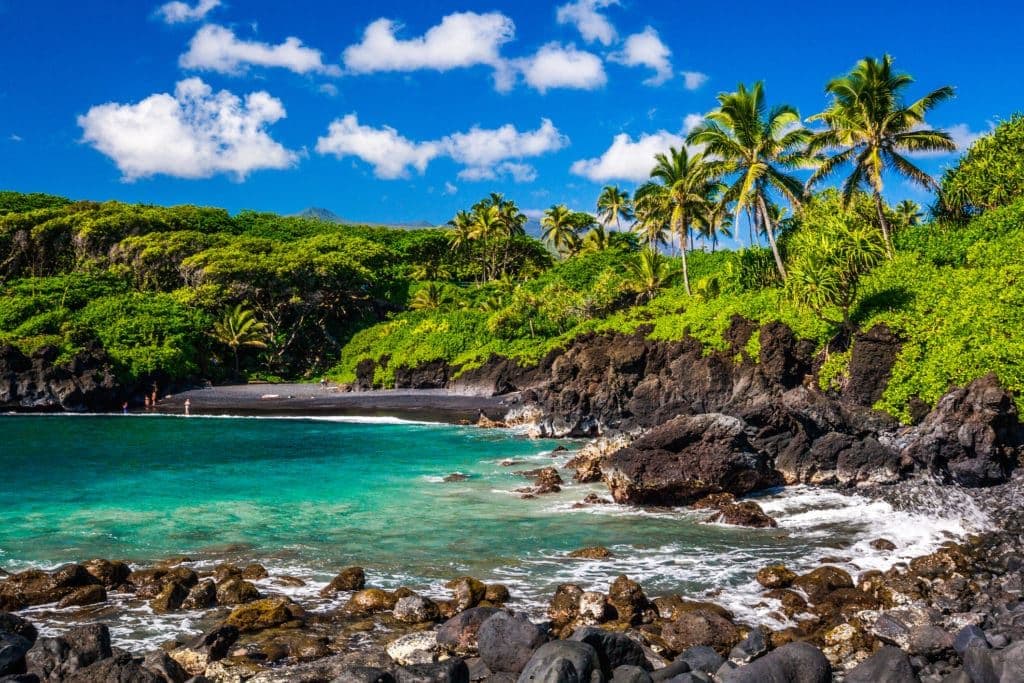
Paʻiloa Beach (Waiʻānapanapa State Park), Maui.
Pa'iloa is the black sand beach that tends to end up as someone's screensaver. It's a short, dramatic arc of black sand with sea caves, blowholes and a dense hala forest lining the perimeter. Wai'ānapanapa State Park requires an advance reservation to enter, which keeps crowds manageable. This is not a place for swimming. The currents are dangerous and waves crash against the shore with extreme force. You can walk the coastal trail in both directions, which makes a wonderful short scenic hike.
Island: Maui
Best For: Fishing and hiking
Swimming: Yes, for experienced swimmers only
Turtles/Seals: Turtles
Facilities: Yes
Parking: Yes, $10 fee for non-residents
One'uli is Maui's hidden black sand beach, tucked inside Mākena State Park just south of Big Beach. The sand is dark and coarse and it is rocky along the edges of the bay, but when the water is calm this spot can be great for snorkeling. Bring water and everything you will need, because there are no facilities here whatsoever.
Island: Maui
Best For: Fishing and snorkeling
Swimming: Yes, but check conditions first (can be hazardous)
Turtles/Seals: Turtles
Facilities: Yes
Parking: Yes, $10 fee for non-residents
Located in Mākena State Park
Do not expect to walk barefoot on black sand beaches. Black sand absorbs heat far more intensely than white or golden sand, and on a sunny Hawaiian afternoon it can reach temperatures that will blister bare feet within seconds. Water shoes or sturdy sandals are essential, and even then, test the sand before committing to a long walk. Lava rock makes strolling these beaches hazardous. Its sharp, uneven surfaces could cause you to roll your ankle or even slice through thin slippahs.
Before entering the water at any black sand beach, take five minutes to simply watch the ocean. Many of these beaches have no lifeguards and there are powerful shore breaks and unpredictable currents. If the water looks churned up, foamy or is pulling visibly sideways along the shore, stay out. Ask a local or check the surf report for that specific location before you go.
Honu, or Hawaiian green sea turtles, are drawn to the warmth of dark sand and regularly crawl out of the water to rest, along with Hawaiian monk seals — one of the most endangered marine mammals on earth. If you encounter either, the rule is simple: stay at least 10 feet away, keep your voice low, and never position yourself between an animal and the water. Don't linger too close for photos, and never approach a seal or turtle that appears to be sleeping — resting is critical to their health. If other beachgoers are getting too close, a calm, friendly word goes a long way. These animals aren't attractions; they're residents.
*Before heading out, check current beach and ocean conditions. Oceansafety.hawaii.gov offers downloadable safety guides in multiple languages and up-to-date information on which beaches are swimmable and where lifeguards are on duty.
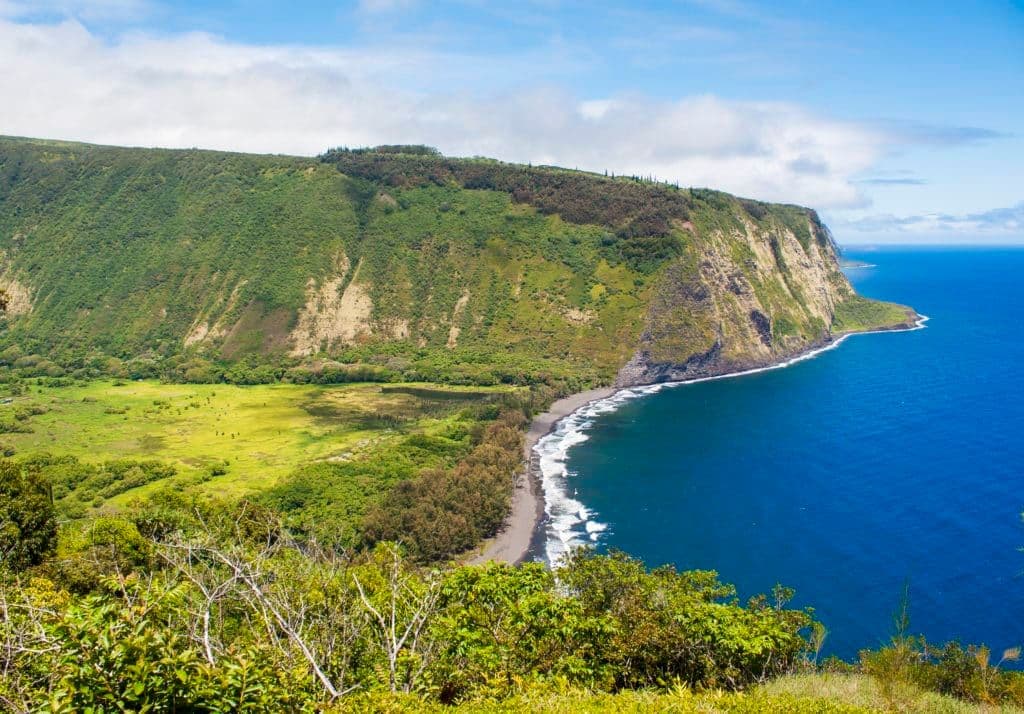
A view of Waipiʻo Valley from the Waipʻo Lookout on Hawaiʻi Island.
Each black sand beach has its own character. Some are better suited for families, while others are more rugged. A few offer calm conditions for swimming or snorkeling, while others are best appreciated from shore.
Richardson Ocean Park in Hilo ranks as a top choice for families thanks to nearby parking, protected swimming areas and tide pools ideal for beginner snorkelers. The park also has picnic tables, restrooms and lifeguards on duty.
Punaluʻu Black Sand Beach is another family-friendly option with facilities, picnic areas and lifeguards. Marine life sightings are common, including honu resting on shore and spinner dolphins occasionally visible offshore. Always confirm ocean conditions are safe before entering the water.
Two black sand beaches stand out for swimming, though conditions can change quickly depending on weather, surf and currents. Always check conditions before getting in the water.
Punaluʻu Black Sand Beach and Richardson Ocean Park both offer the best opportunities, with the caveat that Punaluʻu can become unsafe during high surf since it lacks the rocky protection found at Richardson.
Kīholo Bay can also offer calm, clear conditions ideal for snorkeling. Access requires a hike of about one mile each way, but the sweeping coastal views and vibrant shades of blue along the way make the effort worthwhile.
All black sand beaches are visually striking, but Pololū Valley Beach stands out for its dramatic cliffs, lush greenery and cultural significance as an area associated with the upbringing of King Kamehameha I.
Local tip: Do not attempt the hike down during rainy weather. The trail becomes slippery and dangerous when wet. This beach is not suitable for swimming and is best visited on dry, sunny days.
Waipiʻo Valley is closed to visitors (both local and tourists) indefinitely. Hiking into the valley is not allowed, as most of the land is privately owned. Hiking to waterfalls is not permitted. The beach is not safe for swimming and has no facilities. However, the Waipiʻo Lookout still offers one of the most scenic views in Hawaiʻi.
Families may want to avoid Kehena Beach, due to its steep hike and clothing-optional setting.
Hawaiʻi’s trade winds and steady temperatures contribute to its appeal, with ocean temperatures generally ranging from 74 to 80 degrees depending on the season. Coastal conditions, however, can change rapidly.
During the wet season from November through April, waves and currents can be dangerous, particularly on north- and east-facing shores. Winter storms can generate hazardous surf on any side of the islands.
The drier season runs from May through October and generally offers calmer ocean conditions. Hurricane season begins in June and storms can develop quickly, sometimes affecting surf and visibility. Southern Hemisphere winter swells can also impact south-facing shores during summer, while west- and north-facing beaches are typically calmer.
Trade winds usually blow from the northeast, though during parts of winter they may shift to warmer, more humid Kona winds from the south or west.
Morning is typically the safest time for ocean activities, from sunrise until about noon, when winds and surf are often calmer. After heavy rain, it is best to avoid swimming, especially in murky water that may contain debris or runoff.
Punaluʻu Black Sand Beach earns top honors for accessibility and amenities. Easy parking, restrooms, picnic tables, frequent marine life sightings and often swimmable conditions make it the most visitor-friendly option.
It is also highly photogenic, with dramatic contrasts between black sand, green vegetation, blue water and white surf. Keep your camera ready and remember to admire wildlife from a respectful distance.
Join our newsletter for travel inspiration, insider tips and the latest island stories.
By subscribing, you agree to receive emails from Hawaii.com. You can unsubscribe anytime. See our Privacy Policy.