By M. Kruse
1 April, 2025
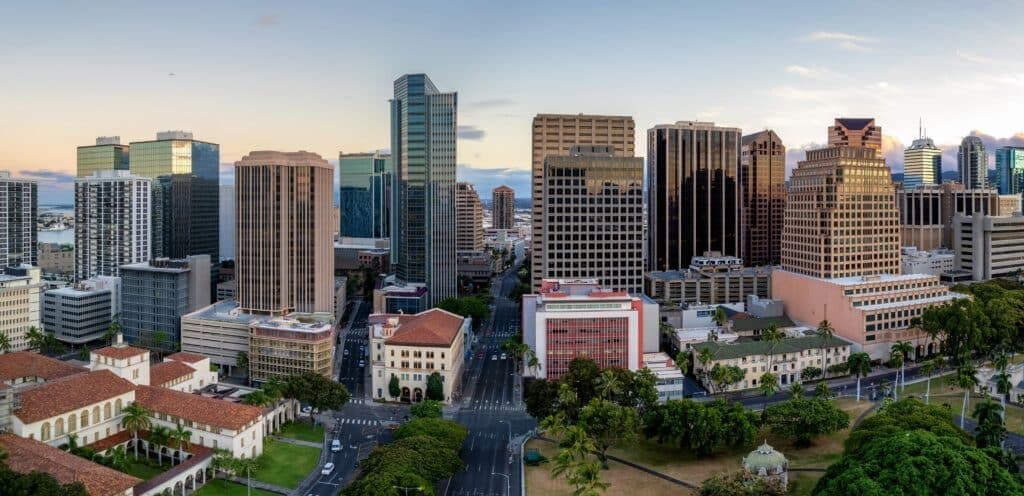
Downtown Honolulu and its financial district at sunrise. Photo courtesy of Shutterstock.
This article was originally published on April 1, 2025, and was updated March 29, 2026.
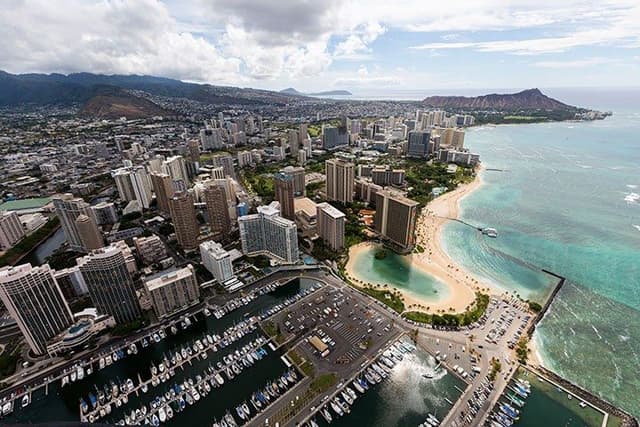
If you ask a local for things to do in downtown Honolulu, there won't be anything on the list that involve Waikīkī beaches. Although Waikīkī is the epicenter for tourism on Oʻahu, it is not the island's downtown district. Actual downtown is about three miles west of Waikīkī and has an entirely different personality and purpose.
This is the island’s historic and civic heart. This is where you'll find some of the oldest buildings on O'ahu, the royal palace, the state capitol, art museums and galleries. Put on your walking shoes, here are our recommendations for Downtown Honolulu.
When to come: Downtown is beautiful year-round, but the holiday season is when it truly sparkles. The main attraction is the elaborate Christmas decorations at Honolulu Hale, Honolulu's city hall. Come in the evening, when lights and festivities line King Street from Alakea Street all the way to Thomas Square. Thousands come out for the tree lighting and parade, it’s a tradition that locals look forward to every year. If you are coming during the daytime for tours and sightseeing, weekdays are best. Start early, the mornings are quieter and the museums close by 4 p.m.
Where to stay: While most of Oʻahu's hotels are in Waikīkī, there is one hotel in downtown. AC Hotel is in the middle of all the downtown action and centrally located for exploring the rest of the island. Make sure to visit their speakeasy Yours Truly, hidden away on the basement floor.
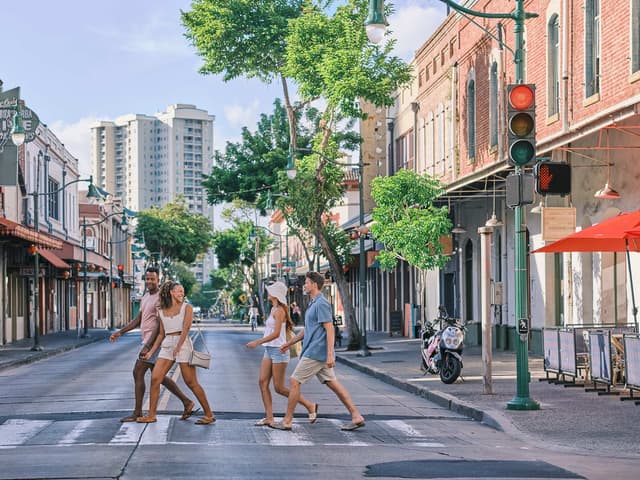
How to get around: The beauty of downtown is that it is entirely walkable. There are also Biki stations scattered throughout the neighborhood if you want to hop on a bike. To get to downtown from Waikīkī you can take TheBus (W Line or Route 2), ride Biki or take a rideshare for about $15.
Parking: Parking is limited. Your best bet is to take public transportation, a rideshare or ride a bike to this neighborhood.
What to wear: The best way to explore this neighborhood is on foot, so wear comfortable walking shoes, a hat and sun protection.
Always travel with aloha: Have respect for the space and the people who live here. Do not get rowdy or loud in the street and never leave any trash behind.
See all
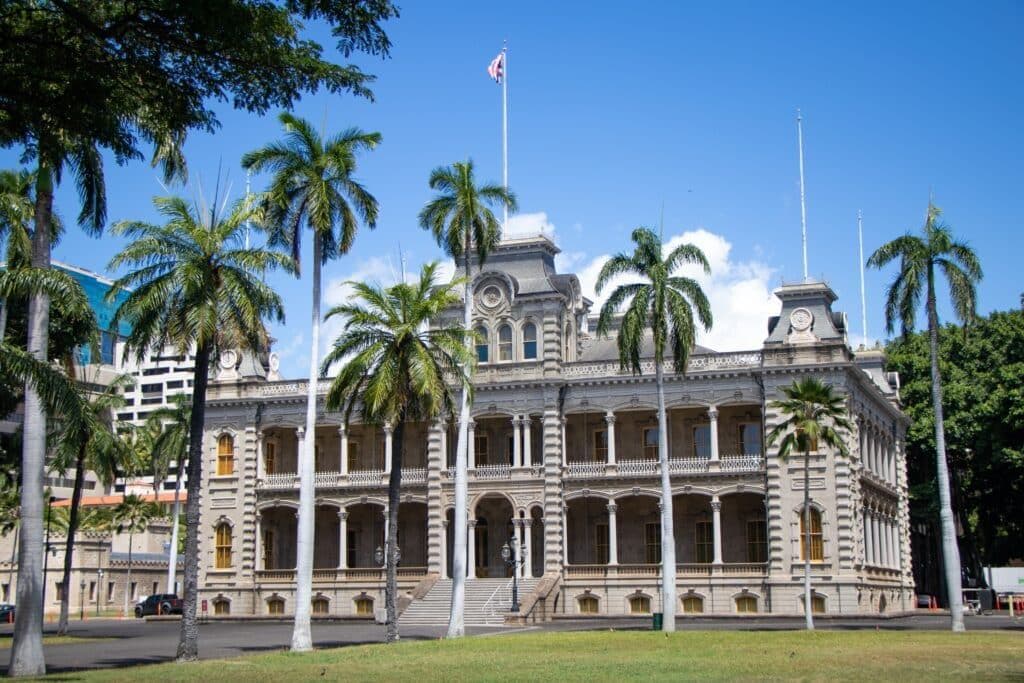
ʻIolani Palace in Honolulu. Photo by Shutterstock.
Downtown Honolulu is where the islands’ past meets its present. Learn the entire story of Hawaiʻi from chiefdom to monarchy to statehood. Explore Oʻahu's robust local art scene. Tour the island's most beautiful historic architecture. Sample the cuisines of the diverse population that make Hawaiʻi what it is today.
Begin your journey at ʻIolani Palace, the only royal palace in the United States. Completed in 1882, it was once home to Hawaii’s last two reigning monarchs, King Kalākaua and Queen Liliʻuokalani. The palace is a testament to the opulence and sophistication of the Hawaiian monarchy, featuring a stunning koa staircase, grand portraiture and lavish decorations. Today, guided tours offer a fascinating glimpse into the lives of Hawaiian royalty, allowing visitors to walk through the ornate halls and learn about the palace’s historical significance as well as the illegal overthrow of the monarchy in 1893. Be sure to check out the barracks and the palace basement exhibits for a full picture of the Hawaiian Kingdom’s legacy.
Across the street from the palace is the iconic King Kamehameha I statue. This 18-foot bronze figure is a symbol of Hawaiian unity and strength, commemorating the monarch who united the Hawaiian Islands under one rule in the early 19th century. The statue is a popular spot to take photos, especially when it is adorned with long, colorful leis on Kamehameha Day (June 11), celebrating the king’s enduring legacy.
Behind the King Kamehameha I statue is Ali'iōlani Hale, or the "house of heavenly kings," with its grand facade and clock tower. Originally commissioned by King Kamehameha V as a palace, and completed under the reign of King Kalākaua, it has been home to the Hawaiʻi State Supreme Court since 1874. Between here and the palace you can take a deep dive into the legal and political history of the islands.
In 1820, this church was constructed to be the first Christian chapel in the Hawaiian Islands. The tomb of King Lunalilo, the sixth monarch of the Kingdom of Hawaiʻi, is located on its grounds.
Honolulu Hale is the City Hall of Honolulu. It's architecture is a blend of Hawaiʻi and European influences. Serving as the seat of government for the city, this building is not only a hub of political activity but also a cultural landmark. Visitors can explore the lobby, which showcases historic architecture and art exhibits from local artists offering a multifaceted glimpse into the heart of Honolulu’s civic life.
This notable landmark is an elegant Greek Revival mansion that was built in 1841. It was the home of Hawaiʻi's last reigning Hawaiian Monarch, Queen Liliʻuokalani and today is the official Hawaiʻi Governors Residence.
Downtown Honolulu’s buildings are more than just functional — they’re beautiful reflections of time. The Hawaiian Electric Company building, built in the 1920s, blends neoclassical symmetry with Polynesian design motifs. Meanwhile, the Alexander & Baldwin Building, located near Beretania Street, one of the Hawaiʻi Big Five headquarters, boasts a lava rock base and an open-air courtyard filled with tropical greenery.
The U.S. Post Office, Customhouse and Courthouse on Merchant Street is a stunning example of Spanish mission-style architecture, complete with red tile roofs and arched windows. This area’s preserved streetscape makes it one of the most beloved places for photographers.
Head toward the ocean to Pier 9 to find Honolulu Harbor's Aloha Tower, a former lighthouse and landmark of Hawaiʻi. The tower opened in 1926 and greeted many travelers visiting the island on steamships in its day. It is now home to Honolulu's cruise ship terminal and Hawaiʻi Pacific University.
See all
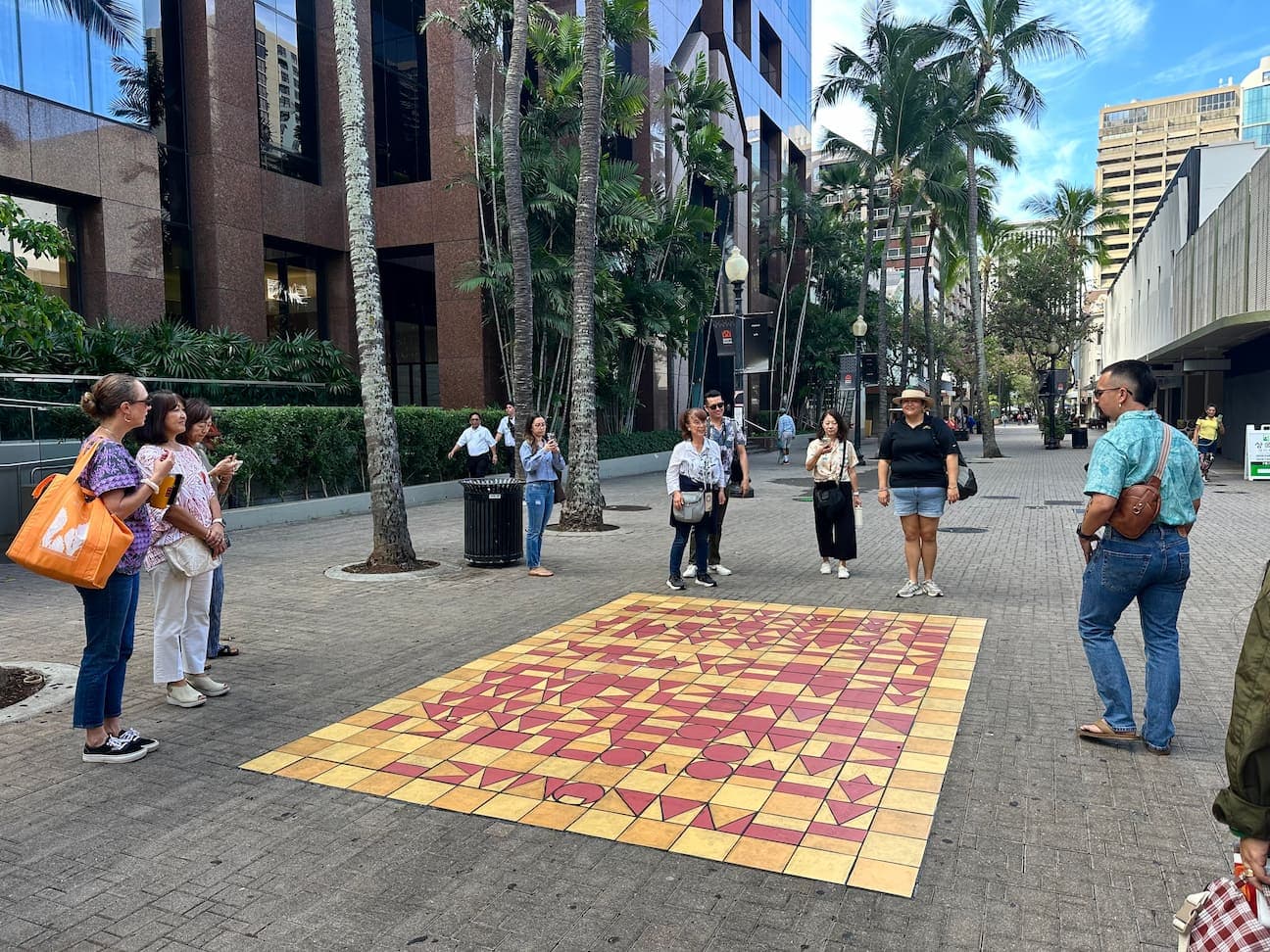
Carl F.K. Pao’s tile mural in Fort Street Mall. Part of Honolulu's temporary public art project: Wahi Pana. Photo by Sarah Burchard.
Capitol Modern, formerly known as the Hawai'i State Art Museum until it was rebranded in 2023, is a 19,500 square feet gallery on the second floor of a beautiful 1928 Spanish Mission Revival building in downtown, just a five minute walk from 'Iolani Palace. There are four galleries that house one of the largest collections of contemporary Hawaiian art in the state. Admission is free.
Outside Capitol Modern, you’ll find rotating installations and permanent sculptures.
A pedestrian-friendly strip lined with murals, mosaic benches and sculptures. On display now are the works of Native Hawaiian poet Imaikalani Kalahele and painter Carl F.K. Pao as part of Honolulu's temporary public art project: Wahi Pana (Storied Places).
Na Manu Nu Oli is a bronze and copper sculpture of branches and birds with water cascading down into a rocky pool. The public art sculpture is located at the intersection of King and Bishop Streets near Fort Street Mall. It was designed by renowned artist Bumpei Akaji and installed in 1969.
On the first Friday of every month, downtown art galleries and shops stay open late, showcasing local artists, live music and poetry performances. Capitol Modern hosts a huge party with food vendors, live performances and artisan market. Nearby Chinatown explodes with locals and visitors barhopping, dining out and catching the latest art opening.
See all
Join our newsletter for travel inspiration, insider tips and the latest island stories.
By subscribing, you agree to receive emails from Hawaii.com. You can unsubscribe anytime. See our Privacy Policy.