

By Sarah Burchard
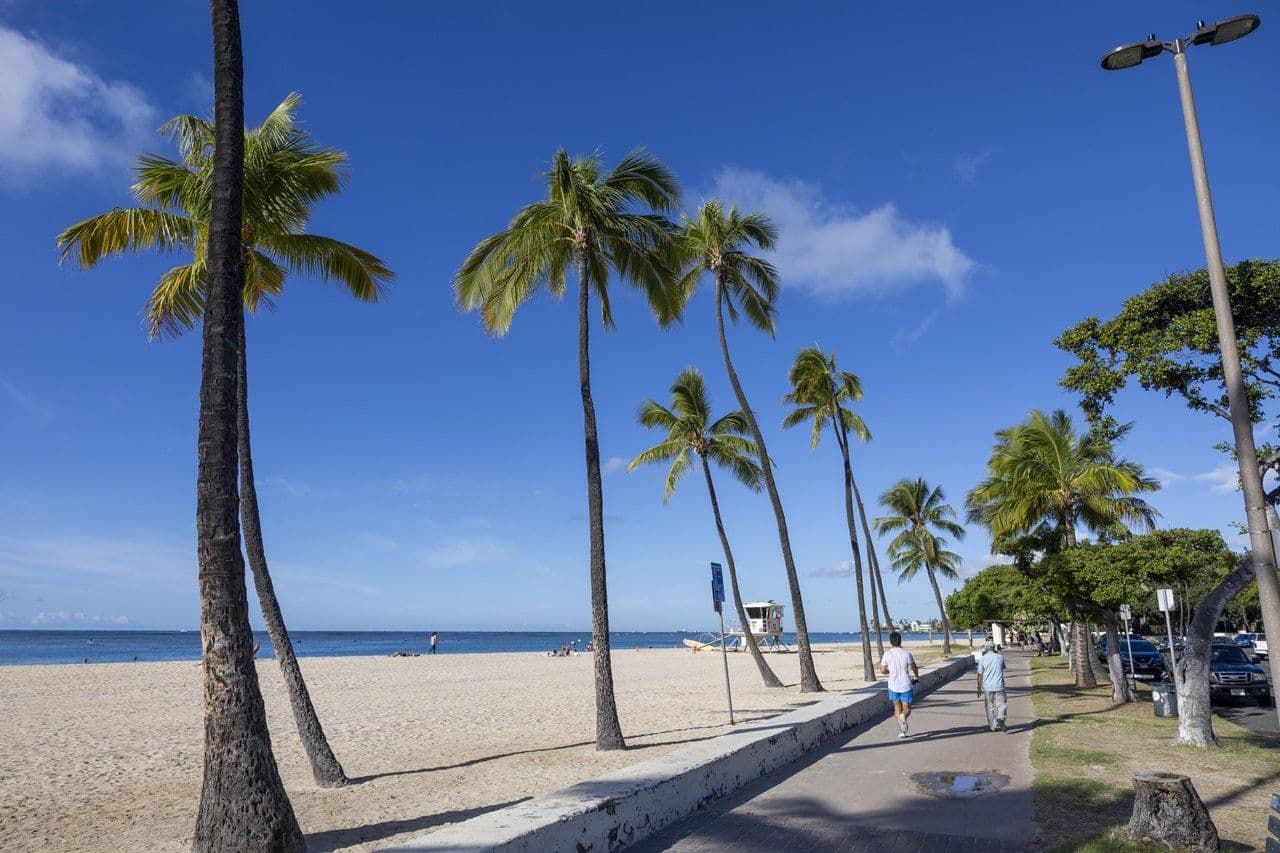
Ala Moana Beach Park. Photo by Marco Garcia.
This article was originally published on Feb. 17, 2012, and was updated Dec. 19, 2025.
Welcome to Oʻahu, home to world-famous Waikīkī Beach and the North Shore’s celebrated stretch of surf breaks known as the Seven Mile Miracle.
This is where Duke Paoa Kahanamoku popularized modern surfing and introduced it to the rest of the world in the early 1900s. It is also where ocean temperatures hover around 70 degrees in winter, climb above 80 degrees in summer and where the sun shines year-round.
While it is true that Oʻahu has some of the best beaches in the world, what makes one beach ideal for surfers and watersports enthusiasts does not necessarily make it a great destination for families or vacationers looking to relax on the shore. Not all Oʻahu beaches are safe for swimming, and some can be dangerous, so it is important to know how to choose the right beach based on safety, accessibility and what you want to experience.
Here are five Oʻahu beaches that are great for first-time visitors.
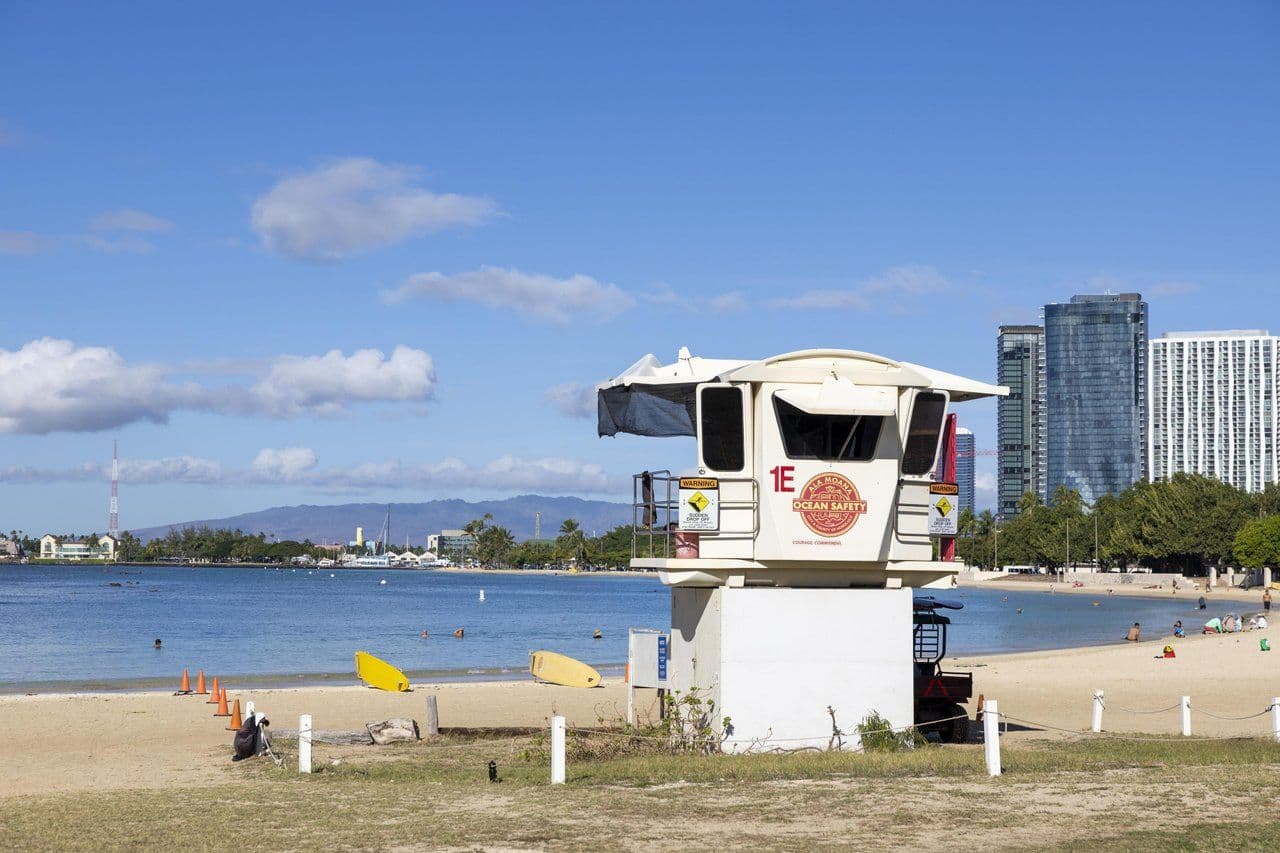
Ala Moana Beach Park. Photo by Marco Garcia.
Join the kūpuna (elders) for their morning swim, paddle out to Bowls with the surfers or come for sunset. The beach at Ala Moana, or "ocean street" is great any time of day (mornings are also great for SUP). Thanks to the man-made reef that keeps the surf out, you can swim here anytime of year. There are also volleyball courts, tennis courts and L&L BBQ if you get hungry. Adjoining Magic Island is a long shady park perfect for jogging, reading and napping. A local favorite.
Best for: Swimming, SUP, surfing and sunbathing.
Includes: Lifeguard stands, public restrooms, showers and free parking.
Watch out for: Once a month, a week after the full moon, this beach gets visited by box jellyfish. Watch out for signs warning swimmers. Sea turtles like to cruise these waters too. If you see one while you are swimming or paddle boarding make sure to keep your distance. It is against the law to approach.
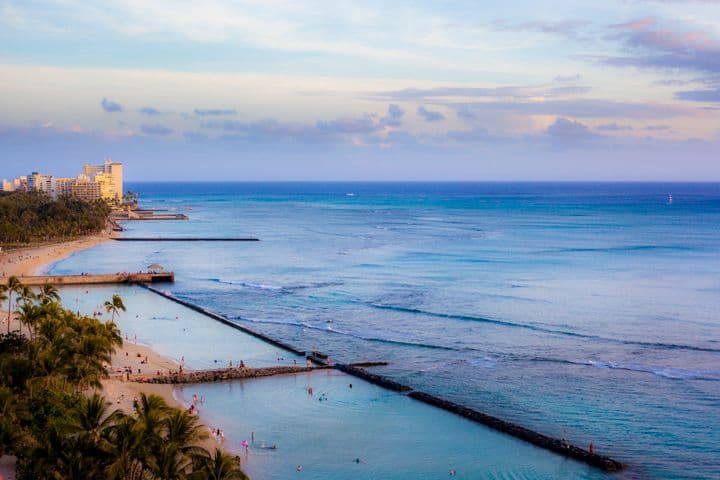
Waikiki Beach. Photo by Neal Kido.
Possibly the most famous beach in all of Hawaiʻi, Waikīkī, or "spouting waters," has been an epicenter for tourists since the 1950s. The 2-mile stretch of white sand coast is actually divided into several sections by various hotels, but each is connected to the other by a boardwalk. The peaceful waters offer good swimming and surfing year-round, and other fun activities abound, including surfing, canoe racing, SUP, volleyball and more. Attractions such as the Honolulu Zoo and Waikīkī Aquarium are mere minutes from the beach, while world-class restaurants, entertainment and shopping destinations offer respite from a day in the water.
Best for: Swimming, surfing (especially for beginners) and sunbathing.
Includes: Lifeguard stands and showers.
Watch out for: Rookie surfers – with less control it's better you get out of their way to avoid a collision.
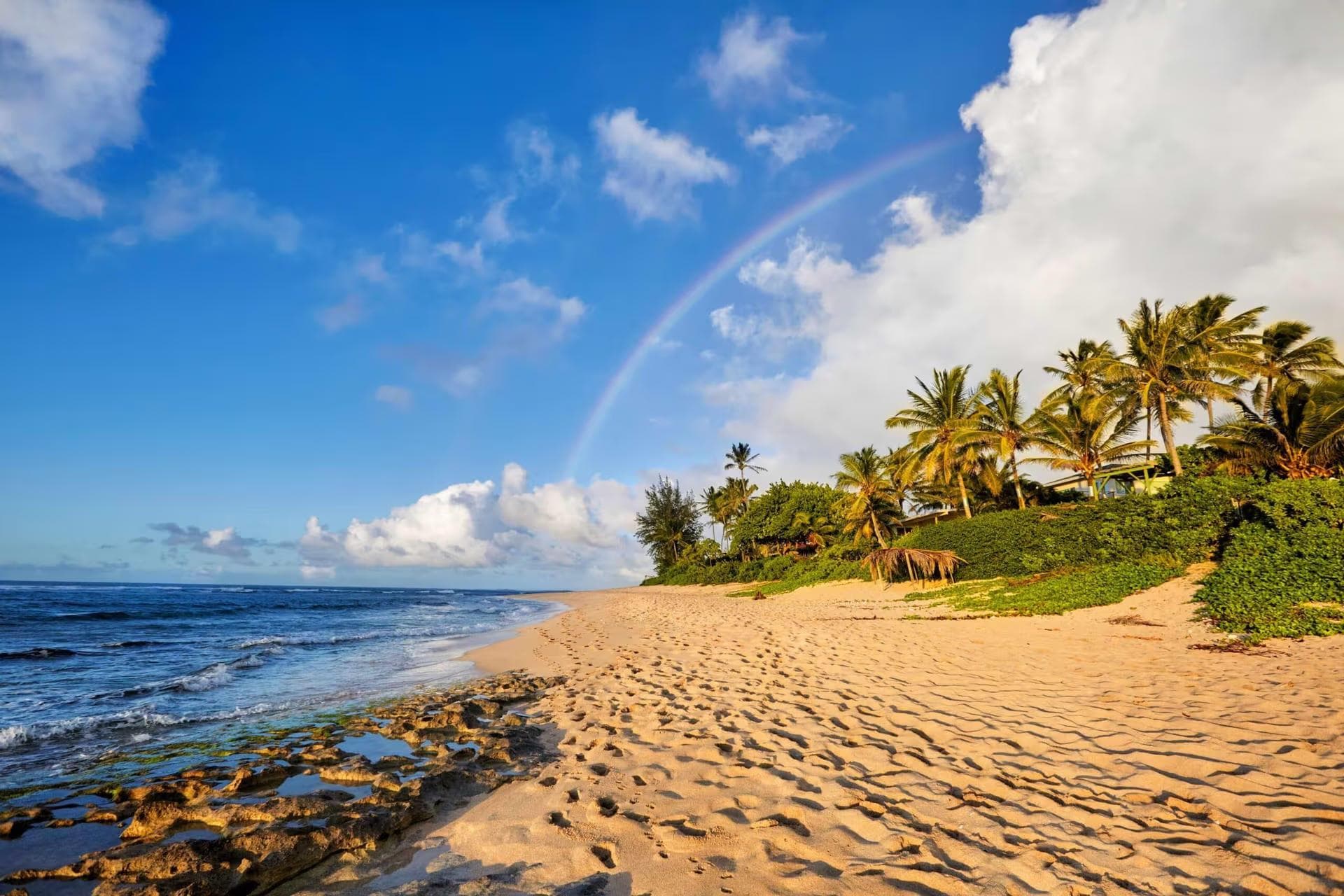
Sunset Beach.
Situated on the historic North Shore of Oʻahu, Paumalū, known commonly as Sunset Beach, is a beautifully long expanse of beach that has enamored both locals and tourists for decades. During the summer, the blindingly blue ocean waters are calm and crystal-clear, making it the perfect destination for swimmers, snorkelers and families. But as the winter months roll in, so do the large waves, making conditions suitable only for the most experienced of surfers. Surf fans are still welcome to watch pros ride these giants from the safety of the shoreline and take photos of this awe-inspiring natural phenomenon. Paumalū translates to "taken secretly." According to "Place Names of Hawaiʻi" written by Mary Kawena Pukui, Samuel H. Elbert and Esther T. Mookini, legend has it a shark once bit the legs off a woman who caught more squid here than what was permitted.
Best for: Swimming, snorkeling, surfing and sunbathing.
Includes: Limited free street parking.
Watch out for: Traffic. Avoid traffic congestion by visiting on weekdays instead of weekends. Mind all signage regarding ocean safety and parking. Surf conditions get dangerous from November to February.
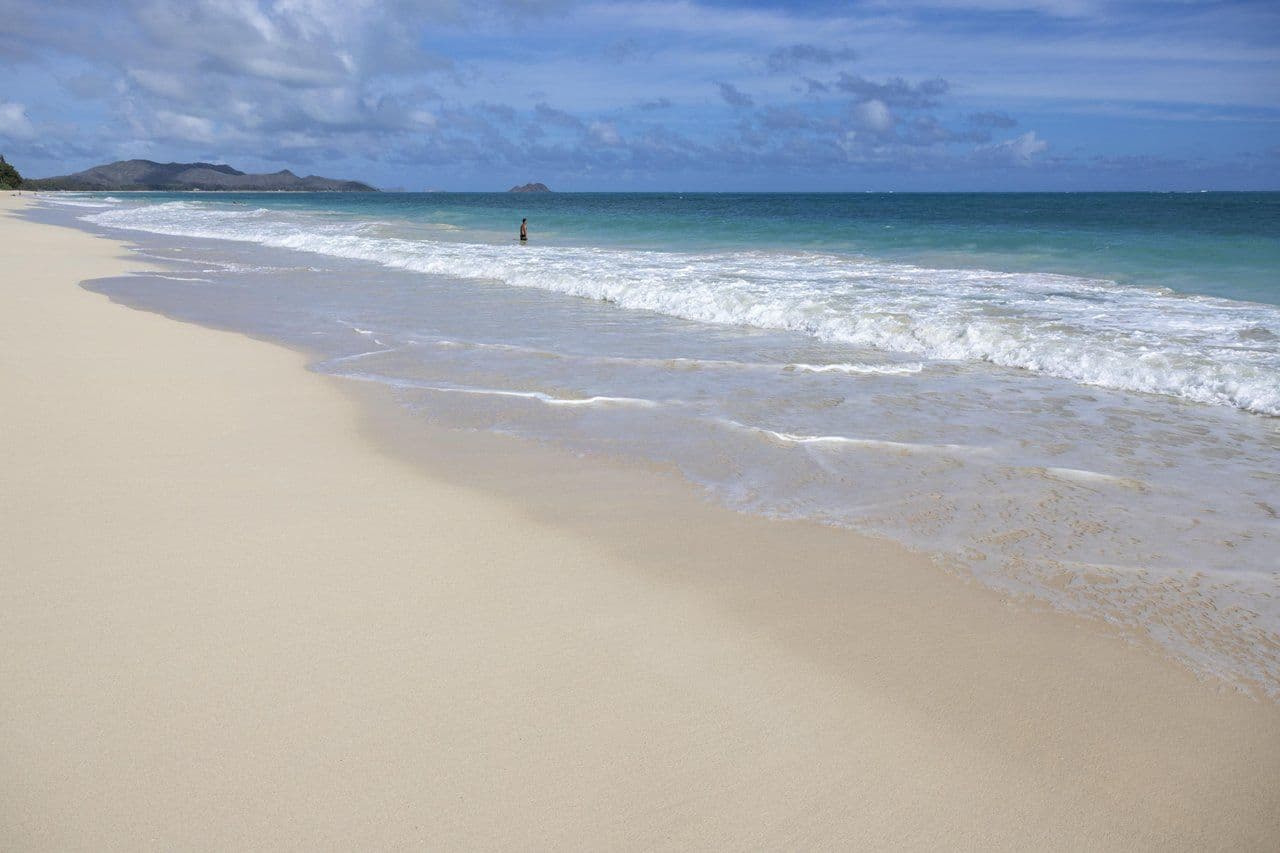
Photo by Marco Garcia.
Stretching nearly five miles from Wailea Point to Makapuʻu, Waimanalo Bay Beach Park is one of the longest beaches on the island. The northern section of the beach is known to locals as Bellows and was once part of an air force base that is now closed. The area is still used today as a popular vacation spot for the military families.
Despite rougher waters, which make it less suitable for inexperienced swimmers, the size, scenery and soft sand make Waimānalo a classic Hawaiian beach that is great for boogie boarding, fishing, sunbathing or walking along the shoreline.
The ride to this beach from Waikīkī is one of the most beautiful on the island, with steep cliffs, misty blowholes and several small beaches along the way. The best part is the backdrop of the towering Ko’olau mountains behind you. Kalapawai Cafe & Deli is nearby when you are ready for lunch and a break from the sun.
Best for: Experienced swimmers and sunbathing.
Includes: Lifeguard stands, public restrooms, showers and free parking.
Watch out for: Traffic on the weekends. Do not park in neighborhoods (this is a primarily residential district).
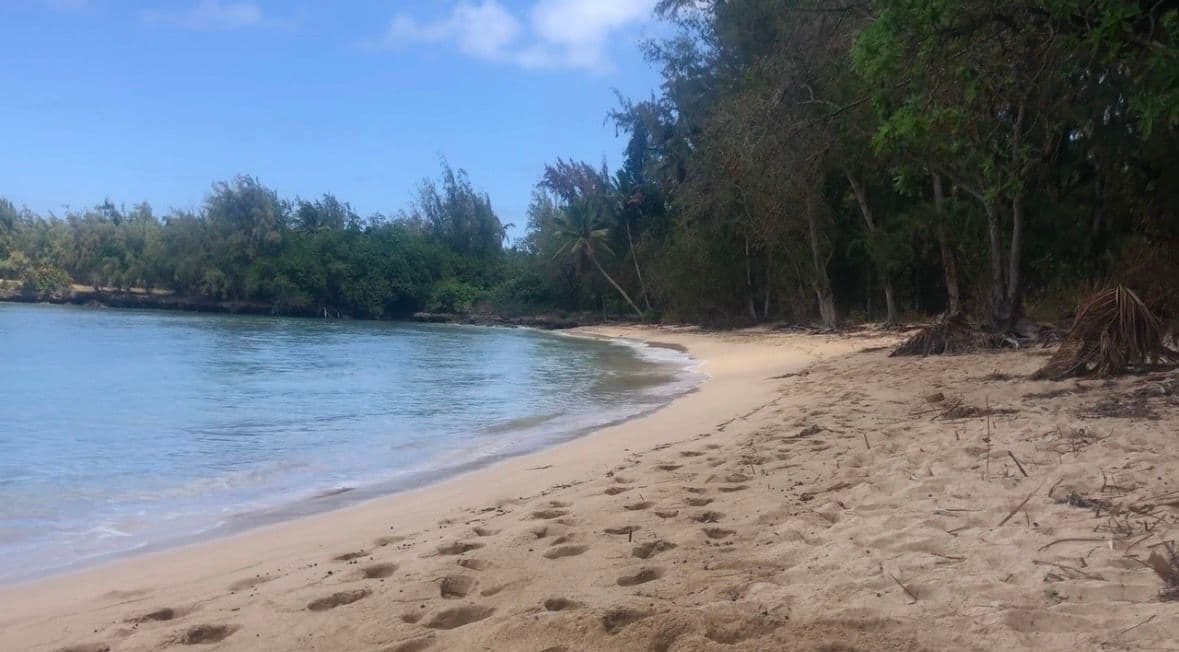
Kewela Bay Beach. Photo by Sarah Burchard.
Although the coastline gets narrower every time I visit this beach, it is still my favorite for swimming and paddle boarding on the North Shore. If you are staying at The Ritz-Carlton O‘ahu, Turtle Bay this beach is just next door. There is a farm stand across the street from the entrance with fresh fruit. A bonus of this beach is there are plenty of shady trees to sit under, but no restrooms or lifeguards.
Best for: Swimming, SUP and sunbathing.
Includes: Limited free street parking.
Watch out for: Traffic. Avoid traffic congestion by visiting on weekdays instead of weekends.
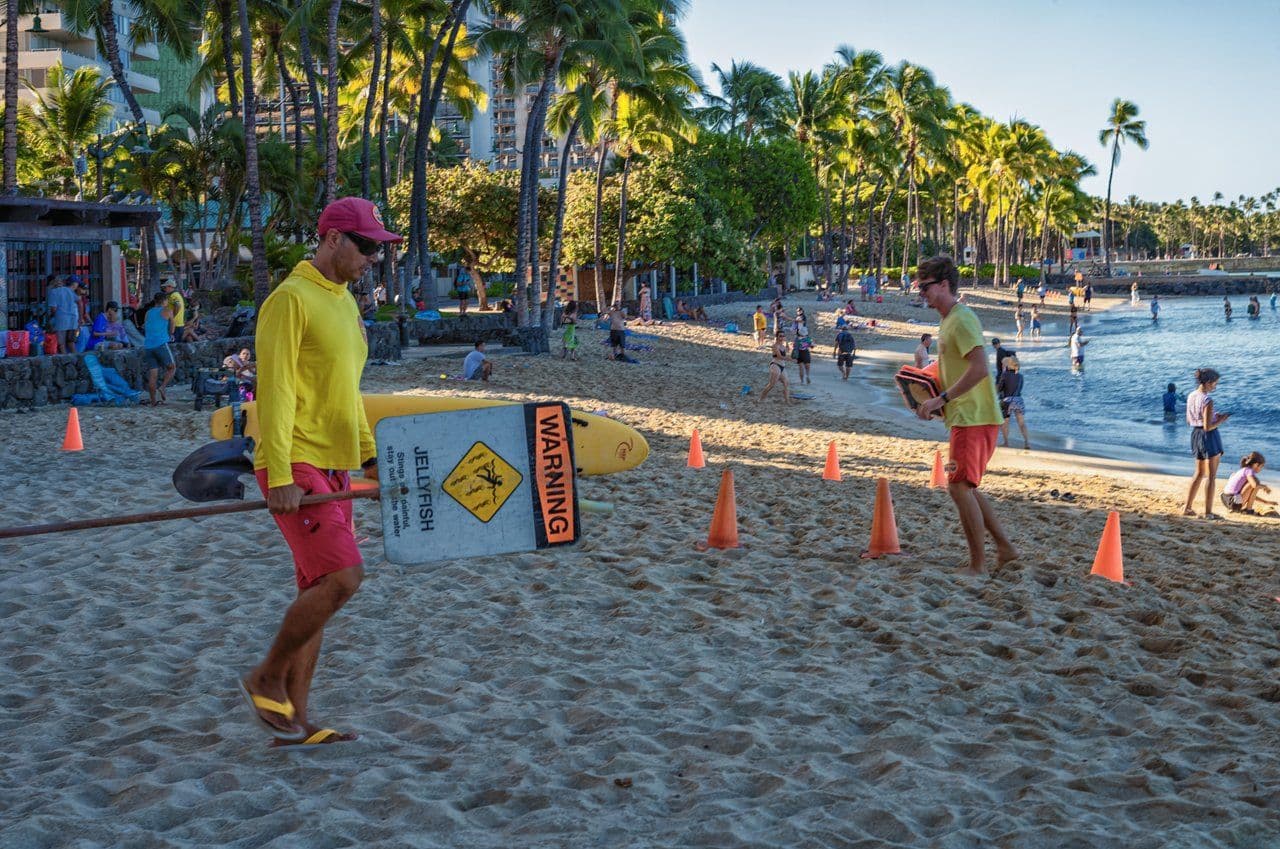
Photo by Theodore Trimmer (Shutterstock).
Never approach a sea turtle or monk seal. They are endangered and protected. It is against the law to touch or approach these animals.
Always remember to read lifeguard stands before entering the water and practice general ocean safety.
Beaches on O’ahu get crowded, especially in Waikīkī, but if you ditch the car and set out by bus, bike or foot youʻll have a much better experience: more swimming and sunbathing, less traffic and searching for parking.
Early morning (before 10 a.m.) and evening (after 4 p.m.) are always the best times to go. There’s better weather, fewer people and the added bonus of seeing a sunrise or sunset.
Remember to pack out all of your trash and belongings. Leave the beach better than you found it.
See all
Join our newsletter for travel inspiration, insider tips and the latest island stories.
By subscribing, you agree to receive emails from Hawaii.com. You can unsubscribe anytime. See our Privacy Policy.


